
Garden myths · Aug 25, 2026 · By Nell Harding
The Goldenrod Is Innocent
Every August the showiest flower in the ditch gets blamed for allergy season, while the real culprit blooms green and invisible ten feet away. The case falls apart the moment you look at how pollen actually travels.
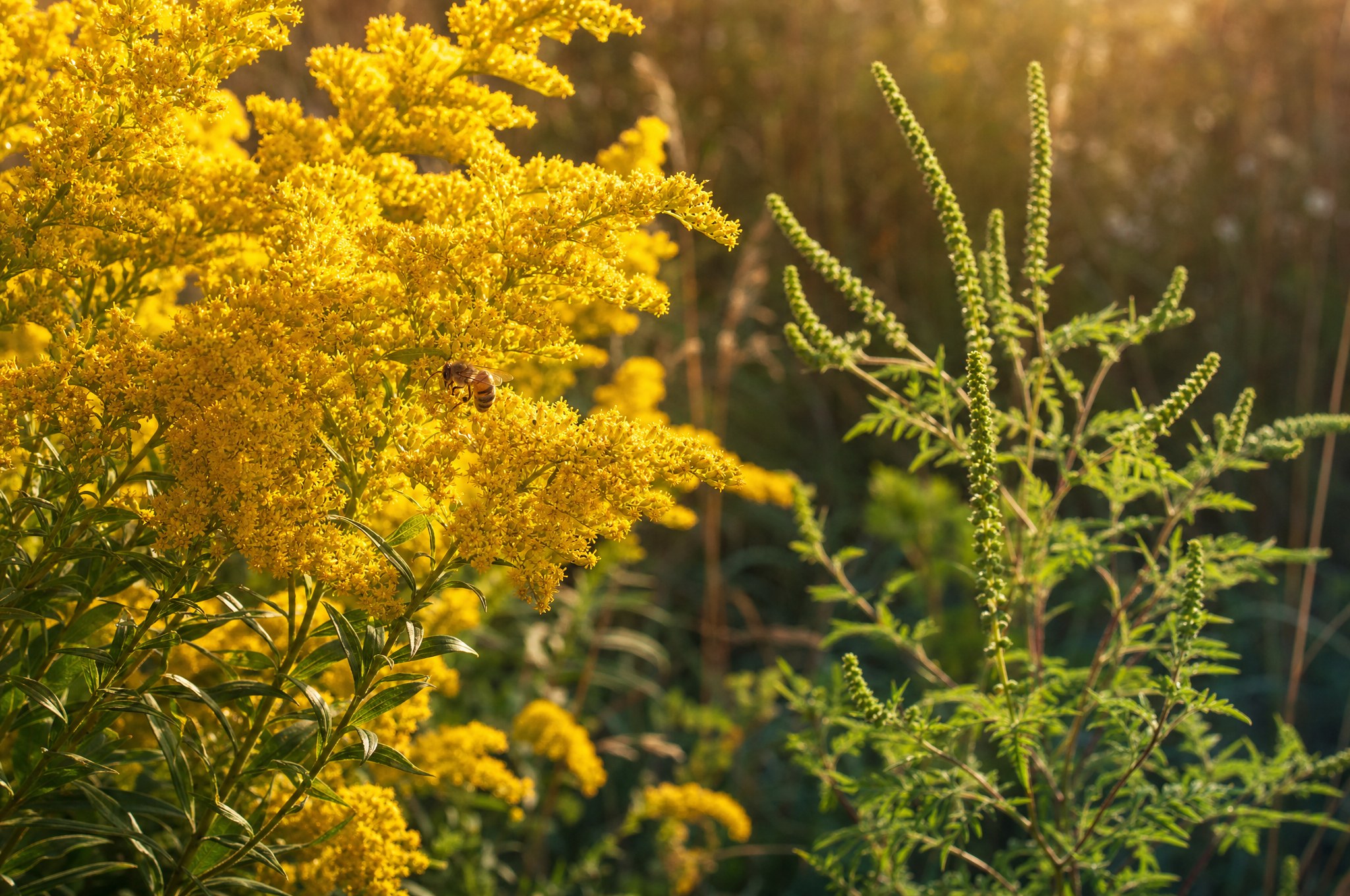

The verdict gets read in every yard in the country about this week. The goldenrod comes into bloom, the sneezing starts the same morning, and the case is considered closed. It is one of the oldest wrongful convictions in American gardening, repeated every August for a hundred years, and it falls apart the moment you ask one question: how would that pollen ever reach your nose?
Here is the charge sheet. Late August arrives, the ditches and fence lines light up yellow, and within days half the neighborhood is rubbing its eyes. The timing is real. The flowers are unmissable. Any jury of sufferers would convict the plant standing right there in plain sight, and every year, they do.
But flowers advertise for a reason, and the reason clears the defendant. A plant that blooms in loud, showy color is paying for that display because it needs to be seen, and it needs to be seen because it moves its pollen by courier. Bees, wasps, flies, butterflies and beetles do the hauling. Goldenrod is one of the most insect-visited plants on the continent, and its pollen is made for the job: heavy, waxy grains that stick to a bee's legs like wet cornmeal.
Pollen built to stick is pollen that cannot fly. Goldenrod grains are too large and too heavy to drift more than a few feet on the open air, which is why air-sampling studies almost never find them in any quantity away from the plant itself. To be bothered by goldenrod you practically have to put your face in it and inhale on purpose. Standing in your own yard, you are safe from a plant blooming across the road.
So who is making everyone miserable? The culprit blooms the same weeks, often in the same ditch, and you have almost certainly never looked at it twice. Ragweed wears small green flowers on green spikes over green leaves, a plant designed to be ignored, because it does not need a single visitor. It mails its pollen on the wind, and it mails in volume: a single healthy plant can release on the order of a billion grains in a season, fine and light enough to ride the air for miles.
That is the whole mix-up. One plant runs a billboard and ships nothing by air. Its neighbor runs no billboard and ships everything by air. The sufferer, eyes streaming, sees only the billboard. Ragweed has been getting away with it since before any of us was born, and goldenrod has been paying the fine.
Know the accused
Learn both faces and you can never be fooled again. Goldenrod stands waist high and up, with narrow lance-shaped leaves and those unmistakable arching plumes of tiny yellow flowers. There are dozens of native species, from seaside dunes to mountain meadows, and all of them work the same honest trade: nectar for hauling.
Common ragweed is a knee-to-chest-high plant with finely divided, almost ferny leaves and slim green flower spikes standing up like thin candles. It loves disturbed ground: path edges, driveway cracks, the bare strip along the road. Its big cousin, giant ragweed, does the same act at ten feet tall in rich bottomland. Neither will ever catch your eye, which is precisely the strategy.
The garden response writes itself. Pull ragweed young, in June and July, when the ferny seedlings come out of the ground clean with one tug. A plant you miss can be cut low in early August before the spikes open. Do the pulling on a still morning, and do not bother planting anything in its memory.
The defense calls its witnesses
Meanwhile the wrongly accused deserves better than tolerance. From late August until frost, goldenrod is the backbone of the whole late-season nectar economy. Stand next to a big stand on a warm afternoon and listen: it hums like a substation. Honeybees build their winter stores on it, bumblebee queens fuel on it, and the monarchs drifting south tank up on it the way the nighthawks tank up on flying ants.
If you have room, leave a stand of it at the garden's edge or along the fence, and let it stand through winter. The seed heads feed goldfinches and sparrows in the lean months, the hollow stems shelter next year's native bees, and the show costs you nothing but the mowing you skip.
So this is an acquittal, published at the height of sneezing season, when it is needed most. By all means curse the itch. Curse it while pulling the plain green plant by the path, and leave the gold alone. The pretty one is innocent, and she has been the whole time.
