
Garden myths · Aug 18, 2026 · By Nell Harding
The Monster in the Pond Is Its Janitor
Snapping turtles almost never bite in the water, barely eat live fish, and clean a pond faster than anything else on the payroll. The scariest thing in the pond deserves a pardon.
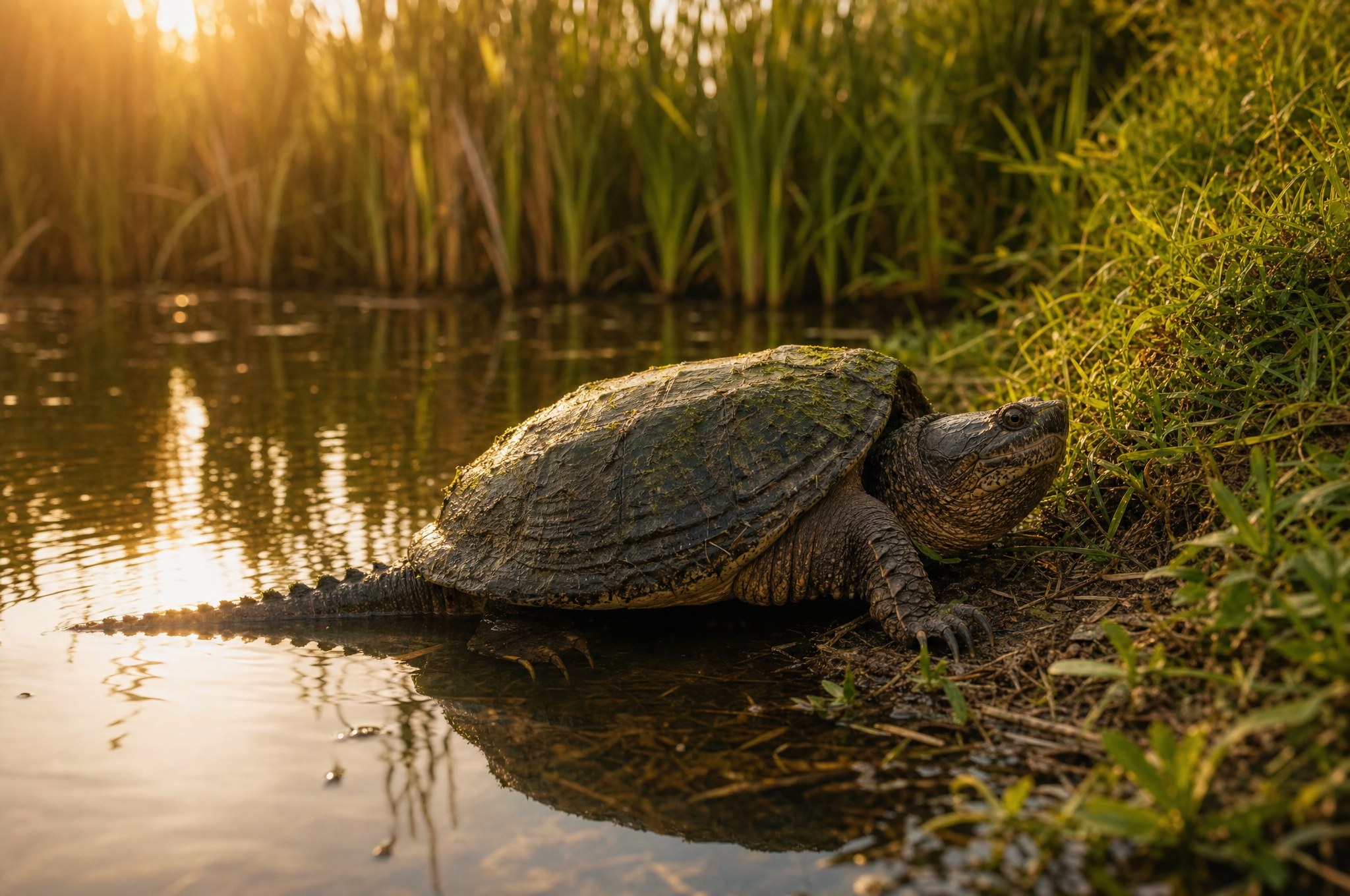

Every pond has the story. Somebody's uncle saw a snapper the size of a manhole cover, somebody's cousin swears one took a duckling, and every August somebody stands on a dock holding a shovel, deciding the pond would be safer without her. It would not. Of all the animals a backyard pond can host, the common snapping turtle may be the most useful and the most wrongly accused at once.
Start with the fear itself, because it is real and it deserves a straight answer. Can a snapping turtle hurt you? On land, yes. A cornered snapper strikes fast and bites hard, and you should never test it. But the fear that keeps swimmers out of farm ponds is aimed at the water, and in the water the animal is a different creature entirely.
Underwater, a snapping turtle's whole strategy is retreat. She is heavy, slow to turn, and completely uninterested in anything your size. Disturb one in the shallows and she slides into the weeds and waits for you to leave. Herpetologists who spend careers wading in turtle ponds report the same thing: swimmers share water with snappers all summer, every summer, and essentially never know it.
The on-land temper has an honest mechanical explanation. A snapper cannot do what other turtles do. Her plastron, the bottom shell, is small, a sort of vest rather than a suit of armor, and she cannot pull her head and legs inside and wait you out. Caught in the open, usually a female crossing a road in June to lay eggs, she has exactly one defense, and she uses it. The snap is not malice. It is the whole toolkit.
Now the charge sheet's second count: she is eating all the fish. This one has been studied, repeatedly, because pond owners have been asking wildlife agencies about it for a century. The answer keeps coming back the same. Fish are a minor item in a snapping turtle's diet, on the order of a twentieth of the menu, and a good share of the fish she does eat were dead or dying when she found them.
What she mostly does is patrol. Aquatic plants, insects, snails, crayfish, carrion. She is the pond's cleanup service, working the bottom where dead things settle, and she works it every day of the season for free.
That job matters more than it sounds. When researchers simulated fish kills in experimental ponds, ponds with scavenging turtles returned to normal water quality days faster than ponds without them. A carcass that lingers is a fertilizer spike and a bacteria farm. A carcass that gets eaten is gone by the weekend. If your pond stays clear and sweet through the hottest weeks of the year, some of the credit belongs to whatever is doing the undertaking.
There is also the matter of tenure. Snapping turtles routinely live several decades, and they do not travel much once settled. The big female in the deep end may have been holding that post since before the house was built. She has outlasted droughts, floods, and three owners of the property, and she has been cleaning the pond the entire time.
So what should you actually do about the snapper in your pond? Mostly nothing. Swim if you swim. Let the dog drink. In the water she wants what she has always wanted, which is to be left alone in the weeds.
The one season to pay attention is early summer, when females leave the water to lay eggs, sometimes surprisingly far from shore. If you meet one crossing the road, she is not lost, and she will finish the trip with or without your approval. If you must move her, never lift her by the tail, which can injure her spine. Slide a car mat or shovel under her from behind and scoot her along in the direction she was already headed. She had a destination.
And keep the shovel for the garden. The pond already employs a janitor with forty years of experience, an armored uniform, and no interest in you whatsoever. The scariest thing in the pond has been on your side the whole time.
One last measure of how upside down the reputation is: in the parts of the world where snapping turtles have vanished, ponds do not get safer. They get dirtier. The monster, it turns out, was the maintenance department.
