
Garden myths · Aug 17, 2026 · By Nell Harding
The house that hears rain coming: sticking doors, tested honestly
When the back door starts fighting you, the old-timers moved the picnic indoors. The physics behind the sign, which rooms lie, and how to run the test tonight.
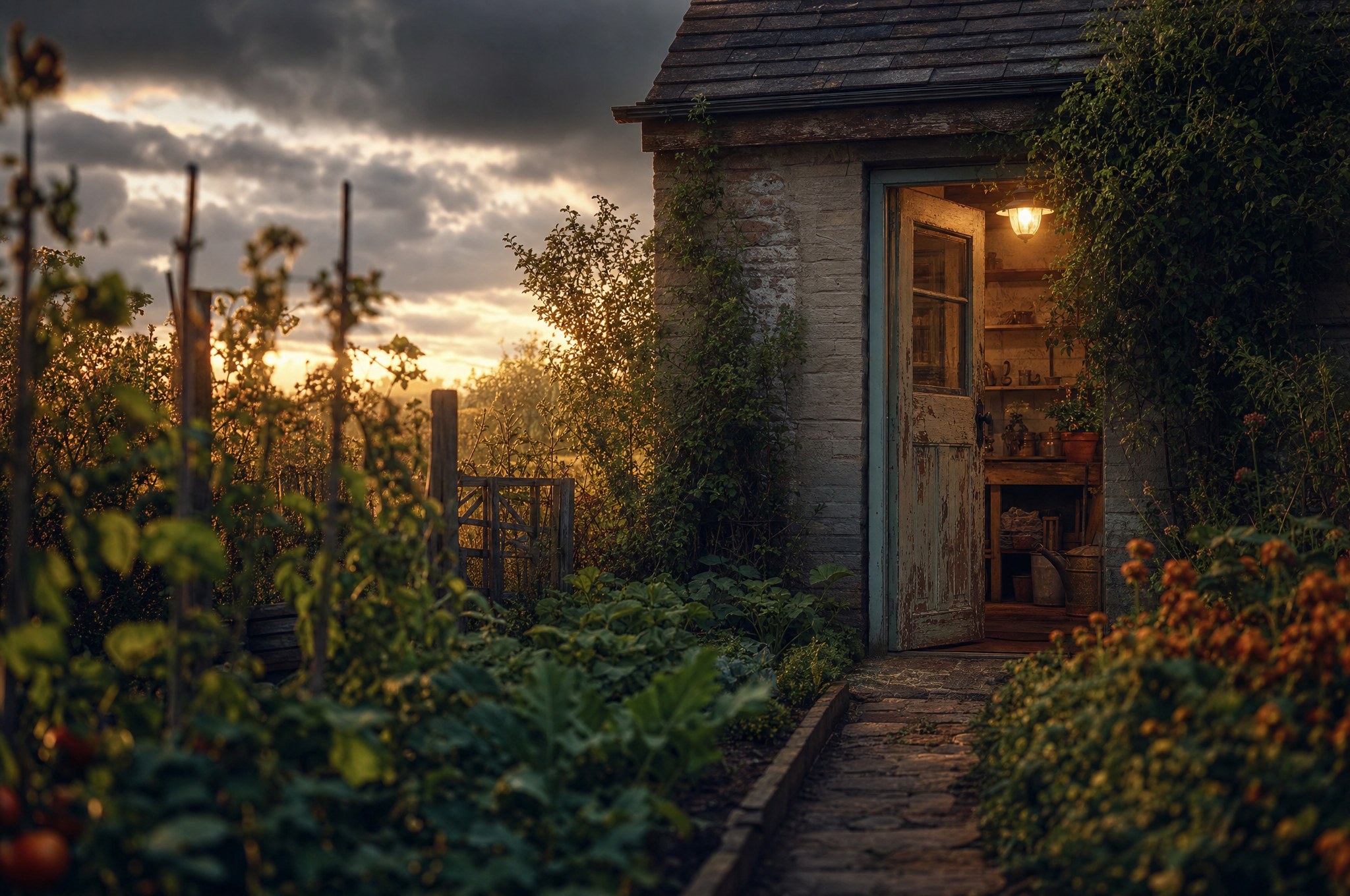

Every old farmhouse kept a barometer, and almost none of them hung on a wall. It was the back door. The one that swung easy all through a dry June and then, some close August evening, needed a shoulder. The drawer that fought back. The window that would not quite seat in its frame. When the woodwork of a house went stubborn, the old-timers started talking about the weather, and the almanac's job in this entry is to put that sign on trial the way it put the crickets and the pinecones before it: what is actually happening, how much forecasting is really in it, and how to run the test in your own house tonight.
The mechanism is the most honest one in the whole weather-lore canon, because it is the same mechanism twice. Wood is a sponge that never fully retires. A tree spends its life moving water, and the lumber cut from it keeps the habit: every board in your house is still trading moisture with the air around it, drinking a little when the air is damp, exhaling when it is dry, swelling and shrinking as it goes. Woodworkers call it movement and build furniture around it. Homeowners call it the door sticking and blame the door.
The forecasting half comes from what the air does before rain. Most wet weather announces itself with a rising tide of humidity, often a full day before the first drop, as moist air runs ahead of the front the way a bow wave runs ahead of a boat. The house takes that drink board by board. Each one fattens by only a hair, but a hair is all it takes in a doorframe that was fitted tight in drier days. The door did not warp overnight; the whole doorway got imperceptibly smaller while the door got imperceptibly bigger, and your shoulder found the arithmetic at bedtime.
This is the same physics that runs the pinecone, the almanac's most-shared weather instrument. A cone's scales are two wood layers that swell at different rates, so moisture bends them closed; a door and its frame are the same trick at furniture scale. The cone is honest about humidity and so is the doorframe. Neither one is reading tomorrow's newspaper; both are reading today's air, and today's air, ahead of most rain, is where tomorrow's weather is already written.
So how much forecast is actually in it? The fair verdict, and this page deals plainly: the sticking door is a humidity gauge, not a rain gauge. Rising humidity precedes most rain, which is why the sign has survived three centuries of kitchens, but humidity can also rise into a muggy week that never quite delivers. Call it a sign that shortens the odds rather than settles them. The old-timers knew this too, which is why the door was never read alone; it was read alongside the smoke, the swallows, and the far-off train, a jury of signs rather than a single witness. One stubborn door says maybe. A stubborn house says bring the cushions in.
Which rooms tell the truth matters, because a modern house is full of lying witnesses. A door onto a bathroom that just ran a shower is reporting your plumbing. A kitchen drawer beside a boiling stockpot is reporting dinner. Anything within reach of a humidifier, a dryer vent, or an air conditioner's steady drying is reporting the appliance. The credible witnesses are the boards that live closest to outdoor air: the back door, the shed door, the porch window, the garage side door, the drawer in the unconditioned mudroom. The shed, in fact, is the best courtroom in the yard, no HVAC, no cooking, nothing but weather to explain what its wood does.
Air conditioning is the reason your grandmother's version of this sign worked better than yours. A sealed, conditioned house holds its indoor humidity nearly flat, which is splendid for comfort and terrible for forecasting; the boards inside it are reading a machine. This is not a flaw in the sign but a note on where to take the reading. The uninsulated farmhouse heard the weather with its whole body. Your house hears it mostly at the edges, so the edges are where you listen.
There is a musical footnote worth keeping, because the same physics runs straight through the parlor. Piano tuners have sworn for generations that instruments drift softly out of tune ahead of long wet spells, and they are right: a piano's soundboard is a wide, thin sheet of spruce built to move with the air, and when it swells, the strings riding its bridge go sharp together. Guitars do the same in a humid August, which is why serious players keep hygrometers in their cases. The house hears the rain coming, and so, faintly, does the music in it.
Now the test, because this almanac does not print a sign it will not put to work. Tonight, before bed, walk the house and try the honest witnesses: the back door, the shed door, the stickiest drawer you own. Grade each one, easy, snug, or stubborn, and say your one-line forecast out loud: stubborn house, rain inside a day or so; easy house, fair skies hold. Then check yourself against the sky tomorrow evening. That is the entire experiment, it costs one minute, and it is the same protocol this page ran on the crickets and the dew: folklore is only worth keeping when it survives being checked.
Run it for a week and you will learn your own house's vocabulary, because every house speaks a dialect. One reader's forecast lives in the bathroom door, another's in a cedar chest lid, another's in the garden gate latch that only catches before storms. Old houses with original wood are chatty; new builds with metal doors and vinyl windows are nearly mute, though their wooden interior doors still whisper. The point of the week is calibration: once you know which door is your house's barometer, one touch on the way to bed reads the sky.
A gardener's postscript, since the same tide of moisture that swells the door is moving through the garden. The evening the house goes stubborn is a fine evening to skip the watering, since the sky is odds-on to do it for you, and a better one to get ahead of the slugs, which read rising humidity as a dinner bell. The sticking door and the sudden slug patrol are the same forecast delivered by different messengers. The compost, for its part, heats along happily either way; it has its own weather indoors.
So the verdict on the oldest instrument in the house: real physics, honest signal, modest range. The door reads the humid tide that runs ahead of most rain, which earns it a place on the same shelf as the cricket thermometer and the pinecone, the shelf for signs that work because wood and air keep no secrets from each other. Tonight the reading is free. Try the back door on your way to bed, and if it fights you, the old-timers would tell you the sky has already made its opening argument.
